Raku firing has a way of pulling you in—its intensity, its unpredictability, the moment when a glowing pot reveals its final colors. My setup, built around an old honey drum converted into a kiln, has taught me to balance control and surrender in this process. Lately, I’ve been refining my approach to achieve those striking copper hues, and I’ve learned that a well-sealed reduction chamber is key. Here’s what I’ve discovered in my recent firings.
My kiln, lined with ceramic fiber blanket, is remarkably efficient. Its insulation is so effective that it can reach the Raku sweet spot of 1050°C in just 10-15 minutes. That speed is a blessing and a challenge. To protect my sculptures from thermal shock, I stretch the firing to about 20 minutes, easing off the propane for a slower, more controlled heat-up. This gentler pace helps the clay withstand the rapid temperature shifts that define Raku.
For my clay body, I rely on a Raku-specific groggy mix. The grog—coarse, pre-fired particles—creates a porous structure that absorbs the stress of quick heating and cooling. Without it, the risk of cracks or even catastrophic failures rises sharply. This clay is my foundation, letting me focus on the firing process rather than worrying about the integrity of the pieces.
The real breakthrough in my recent work has been understanding the reduction chamber’s role in coaxing out vibrant copper colors. After pulling a piece from the kiln, I place it in a metal bin filled with sawdust or newspaper, then cover it with an old baking tray. The tray isn’t ideal—it’s not a proper lid, and it doesn’t seal tightly on its own. To improve the seal, I’ve started weighing it down with a heavy piece of offcut steel. The extra pressure keeps oxygen out, which is critical for the copper glazes to shine.
In Raku, copper glazes rely on a low-oxygen environment during reduction. As the combustibles burn, they consume the available oxygen, reducing copper oxide in the glaze to its metallic form. This creates the rich, iridescent coppers and reds that make Raku so distinctive. If oxygen leaks into the chamber, it can re-oxidize the copper, dulling the colors to muddy green. A good seal maximizes the reduction effect, and I leave my artworks in the chamber for 20-30 minutes to ensure those metallic tones develop fully. The weighted baking tray has made a noticeable difference, but I’m planning to experiment with a wet towel tucked around the edges next time to block even more oxygen until I can source a better reduction chamber.
A more reliable method, I’ve learned, is to invert the bin over a mound of sand, creating a near-airtight seal. Unfortunately, with our house renovations in full swing, I don’t have a permanent setup or a sandbox available right now. For the moment, my makeshift tray-and-steel solution is getting the job done, and each successful firing feels like a small victory.
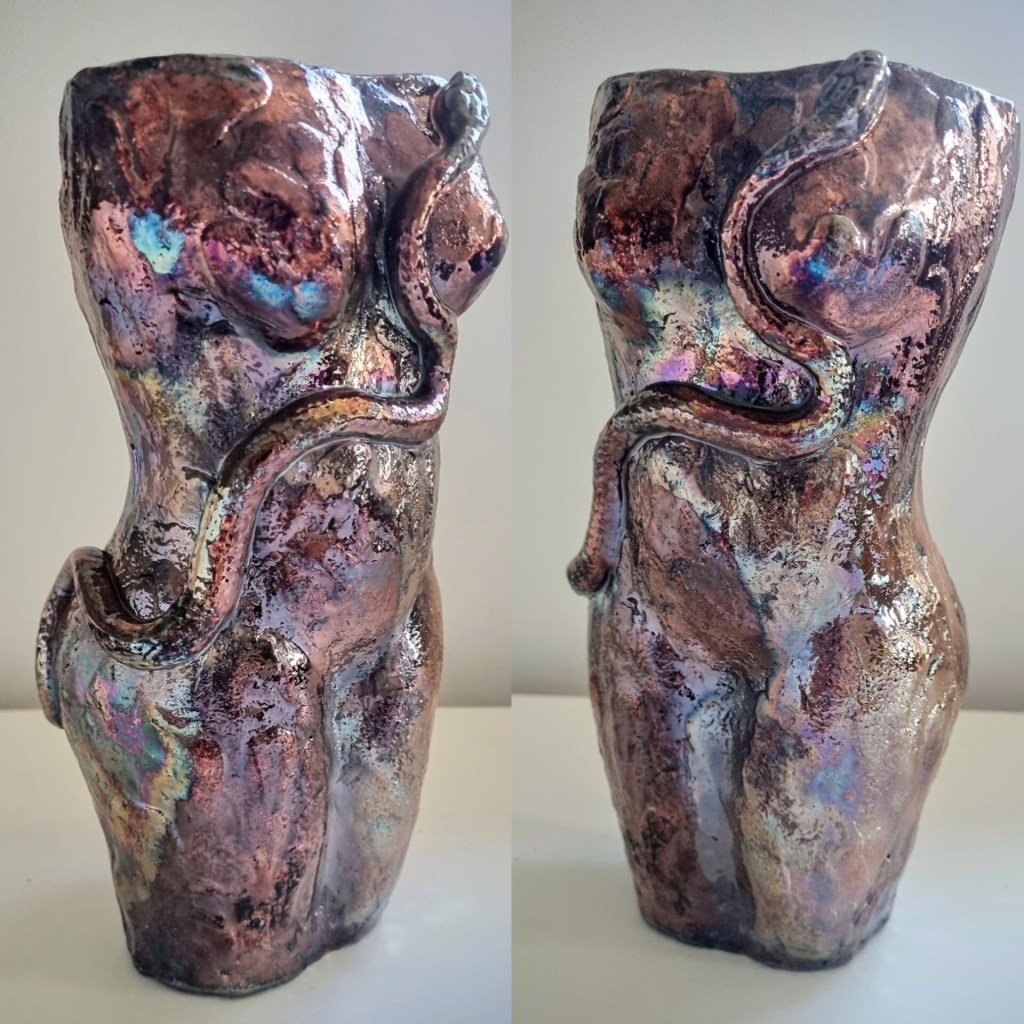
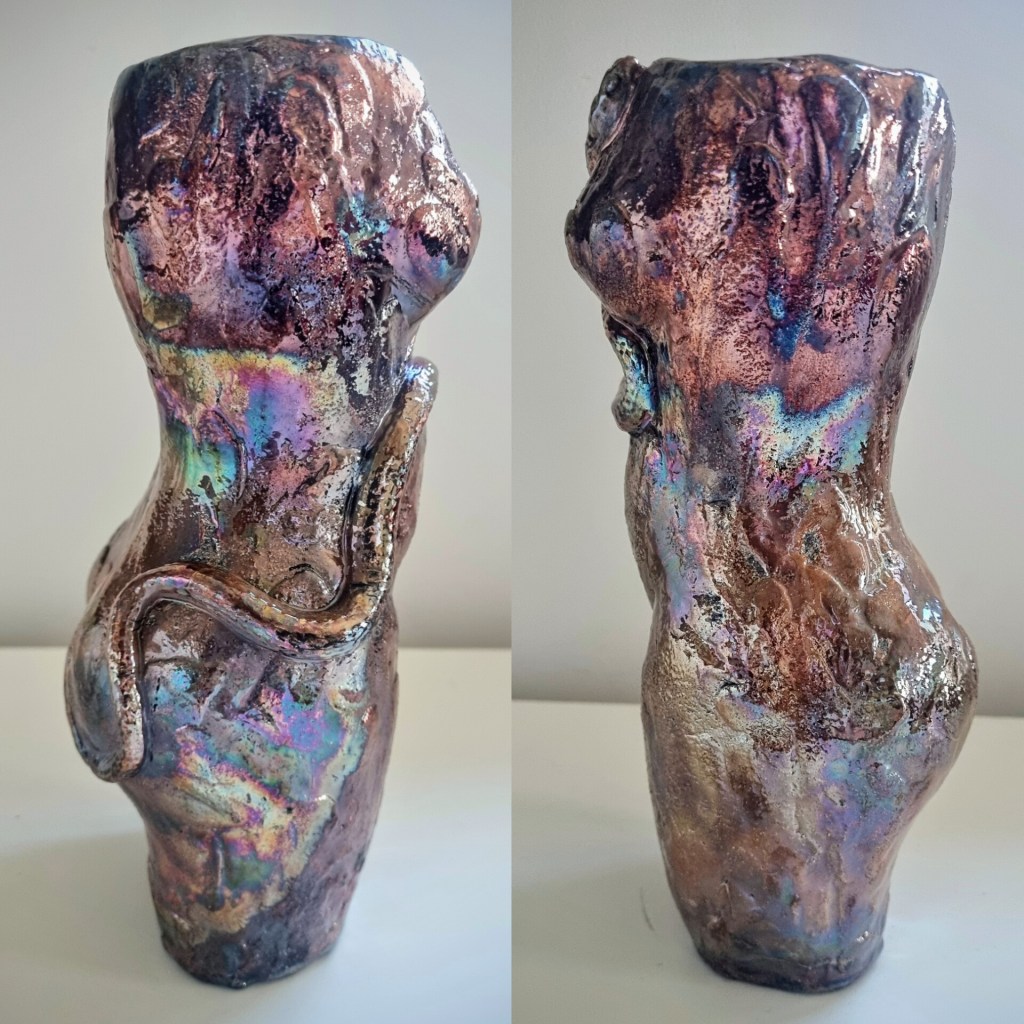
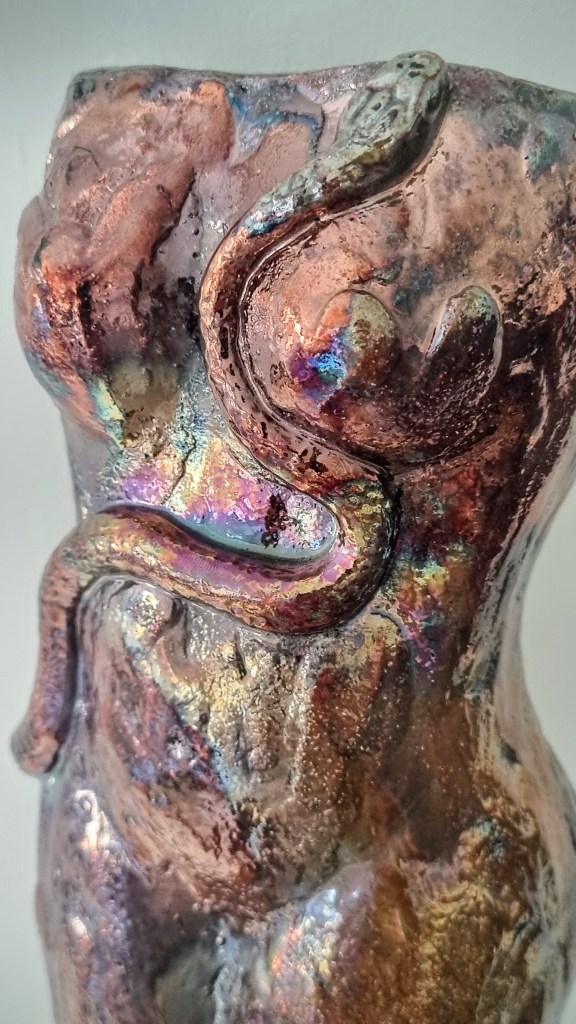

Eve with Snake (decorative vessel) in Raku Copper Penny, will be on display and available for purchase at The Auckland Art Show 27-29th June 2025.
Working with this honey drum kiln has been a process of constant learning. Tweaking the firing schedule, choosing the right clay, and refining the reduction chamber have all brought me closer to consistent, vivid copper results. Raku remains a collaboration with the fire, but these small adjustments let me guide the outcome just a little more each time. When I rinse the ash from a sculpture and see those metallic hues catch the light, it’s a reminder of why I keep coming back to this craft.
Fellow artists – have you experimented with Raku, or are you curious about trying it? Share your thoughts or questions below—I’d love to hear from you.
Keep firing,
Karen
 Animal Sculptures by Karen Wilde NZ